


The conveyor belt essentially consists of an endless belt made of flexible material driven and supported by motorized pulleys. The belt, which varies in width, has a lower strand and an upper strand, which supports and drives the goods placed on it. The belt may be equipped with ribs...
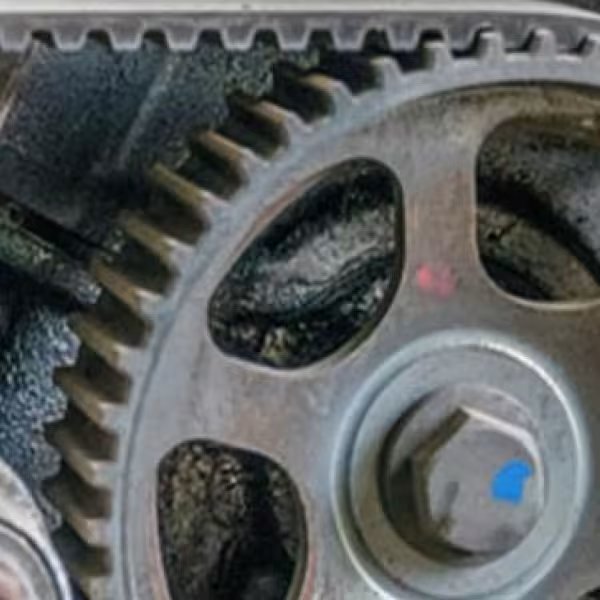
Gates has been involved in the entire history of timing belts. In 1917, John Gates, the founder of the Gates company, created the world's first rubber V-belt. Then, 28 years later, in 1945, Gates created the first timing belt that used teeth to synchronize with the gears...
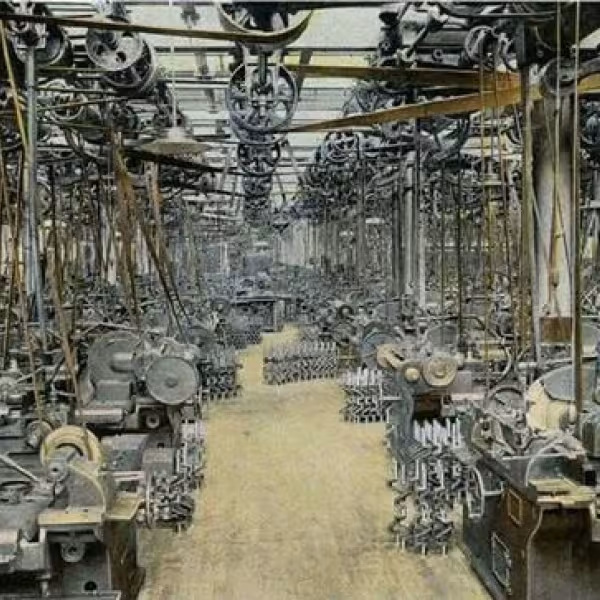
The origins and history of transmission belts are lost in the mists of time. The Babylonians and Assyrians used chains and buckets for water-drawing machines, while the first mention of a mechanical belt transmission with a pulley machine is found in a Chinese text dating from 15 BC.
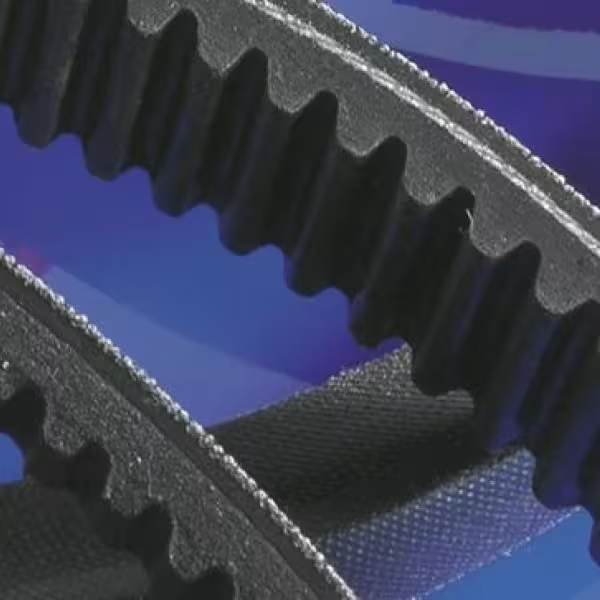
The V-belt was invented in 1917 by John Gates. It revolutionized power transmission. It is the most widely used transmission belt. It avoids slippage and alignment problems and transmits more power than a flat belt.
It is one of the synchronous belts...
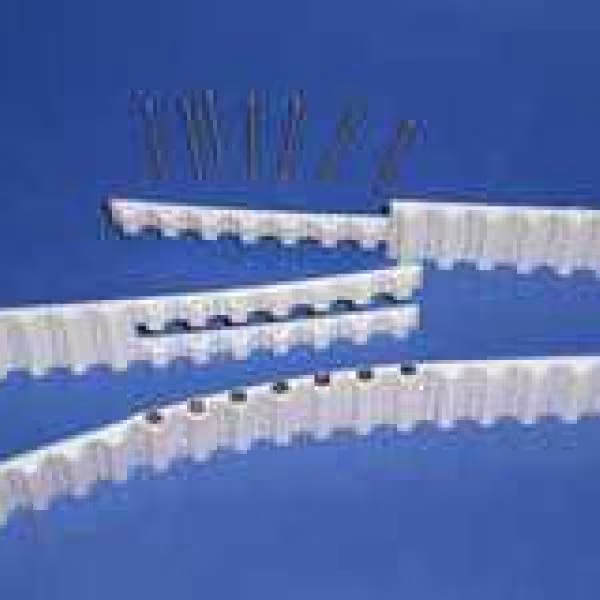
The history of ERO Joint® products began in 2009.
We sought to design pin joints for polyurethane timing belts without drilling into the teeth.
Although demand for this type of product was limited, we were convinced that offering our customers practical, high-performance solutions for quick belt installation would be a considerable advantage.